Home Grown Solutions
West Virginia faces some of the nation’s highest rates of chronic illness and food insecurity. Many of our farmers struggle to access stable markets, while our institutions spend millions on food from outside the region. Good Ground is here to change that.
Planting Seeds
We believe that by connecting local food growers to large, local buyers in the healthcare sector we can grow community wealth, wellness and resiliency, while transforming local markets and institutions.
GOVERNANCE
A Cooperative Approach
Good Ground is led by the Nourish West Virginia Initiative, housed within the West Virginia University Institute for Community and Rural Health.
This USDA-funded initiative convenes a steering committee and project-specific partners and workgroups representing diverse sectors to ensure equity throughout the decision-making process.
Our mission: improve the health and economic prosperity of Central Appalachia by integrating agriculture and health in new, sustainable ways–all while centering and uplifting West Virginia farmers and producers.
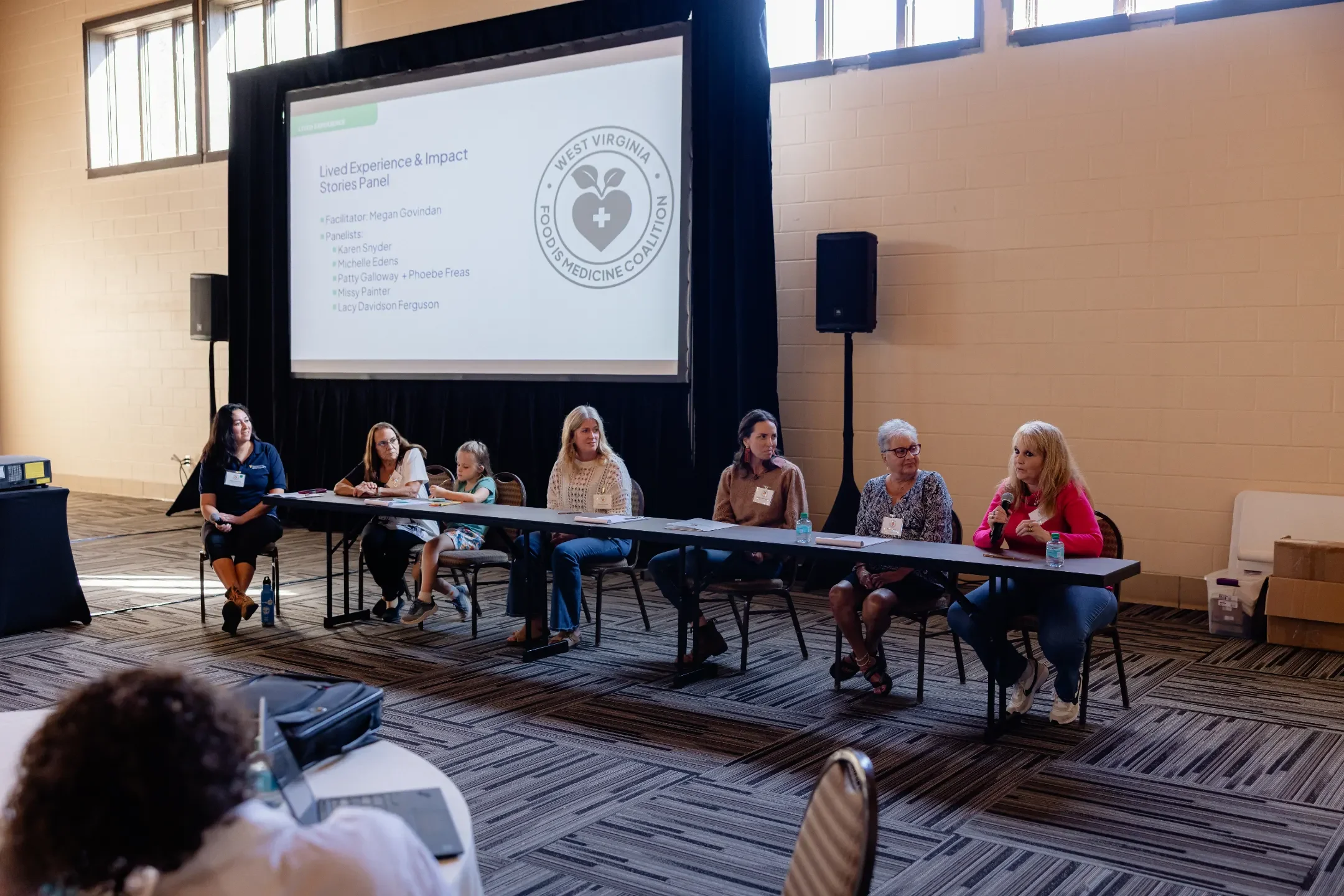
OUR TEAM
People-Powered Work
Megan Govindan, PhD, MPH, MS, RDN
Portfolio Director and Research Scientist, Nourish West Virginia
Megan serves as the director of the Nourish West Virginia Initiative and views the food system as a powerful lever for both public health and economic justice. With over two decades of experience, she bridges the gap between clinical nutrition and regional food procurement. She leads the Good Ground initiative by fostering "anchor” institution partnerships (e.g., working to ensure hospitals and schools buy from West Virginia farmers). Her focus is on creating a circular economy in which local food is the foundation of community wellness.
Mohammad Alam, PhD, MPH, MS
Senior Research Specialist, Nourish West Virginia
Mohammad translates complex community data into actionable insights for food security. He focuses on the "spatial" side of the food system—i.e., identifying where barriers to access exist and how to dissolve them. By analyzing the social determinants of health, Mohammad provides the evidence base needed to secure funding and drive policy changes that support food is medicine programs, as well as aggregation and distribution of food across Central Appalachia.
Rachel Baker, MHA
Project Manager
Rachel specializes in the integration of rural health and outreach, working at the intersection of institutional and community need while helping the next generation of healthcare providers understand that a patient's "prescription" often begins at the local farmers market. She streamlines the farm-to-institution process by identifying volume needs, food safety certifications, and delivery logistics, ensuring that West Virginia-grown products aren't just an occasional feature, but a staple on the institutional plate.
Olivia McConnell
Program Manager
Olivia specializes in the "human infrastructure" of the food system. She believes that a resilient food network is only as strong as the relationships between the people who grow, process, and eat the food. She manages the day-to-day operations of the Nourish West Virginia programs, ensuring that state and community partners have the resources they need to move from ideas to impact in the field.
Nikky Luna, MS, IMC
Senior Manager, Development and Communications
Nikky understands that to change a system, you must first change the story. She focuses on elevating the voices of Appalachian producers and documenting the real-world impact of local food interventions. Nikky understands that a sustainable food system requires sustainable investment. She views storytelling as the most powerful tool for development—bridging the gap between the measurable impact of our work and the philanthropic and public funding needed to fuel it.
Matthew Walker
Research Specialist
Matt specializes in making the "invisible" visible. He believes that data visualization is a bridge between complex agricultural statistics and community action. Matt transforms raw data from West Virginia’s food sheds into interactive dashboards and compelling visual narratives. His work allows partners to see exactly where local food is moving—and where it isn't—enabling the team to target interventions that maximize economic and nutritional impact.